Guide
Staying independent: the things that actually keep people mobile
Strength, balance, protein and sleep, in the order the evidence supports. Supplements come fourth, and we will say so.

Silvera exists to sell mobility equipment, so it would be convenient for us if equipment were the main thing that keeps people mobile. It is not, and pretending otherwise would make everything else we say less believable.
Here is what actually holds independence together, in the order the evidence supports.
One: strength, particularly legs
Muscle mass declines from midlife onward and accelerates after sixty. The consequence is not aesthetic, it is the ability to stand from a chair, climb a stair and recover from a stumble. Resistance training is the only intervention that meaningfully reverses it, it works into the ninth decade, and it does not require a gym: sit-to-stands, a set of stairs and a pair of bags will do.
Nothing you can buy substitutes for this. Not a supplement, not a chair.
Two: balance
Falls are the event that most often ends independent living, and balance is trainable. Standing on one leg while the kettle boils is not a joke; it is the cheapest intervention on this page. Practicing it is worth more than any product we sell.
Three: protein, and enough of it
Older adults need more protein per kilogram than younger ones to maintain the same muscle, and generally eat less. Appetite falls, cooking for one is dispiriting, and protein is the thing that quietly drops out. Getting a real protein source into every meal does more for mobility than any capsule.
Four: sleep
Recovery, balance and reaction time all degrade with poor sleep. It is also the factor most likely to be dismissed as unfixable when it is often treatable.
Five, and only fifth: filling nutritional gaps
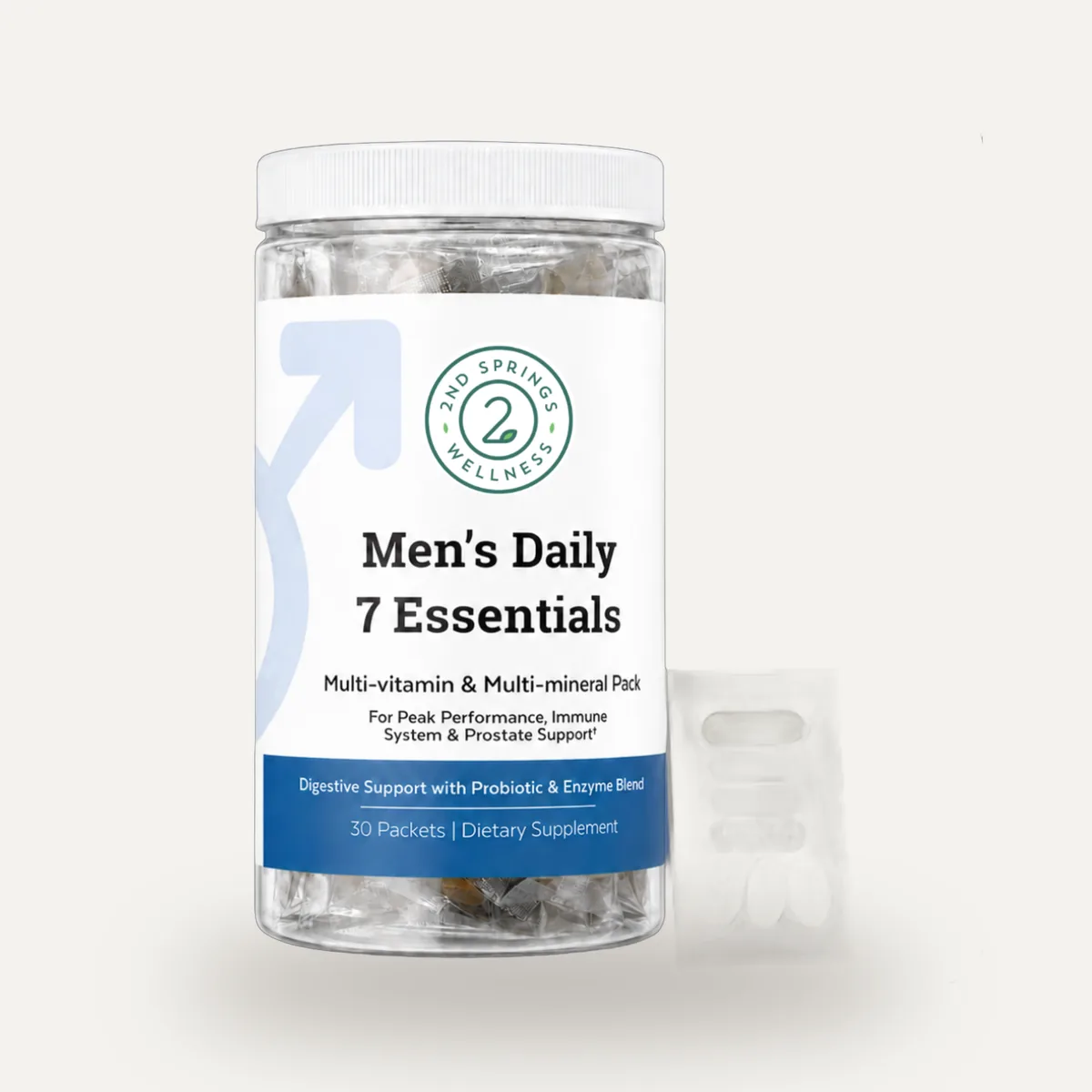
Vitamin D and B12 are the two most commonly short in older adults, for real physiological reasons: skin makes less vitamin D with age, and B12 absorption drops when stomach acid does. A daily foundation covers both, along with the ordinary gaps a smaller appetite leaves.
That is a genuine contribution and it is a supporting one. It works alongside the four items above and it does not replace any of them.
Where equipment fits
Good equipment is not what keeps you mobile. It is what keeps you going out while the four things above do their work, and going out is what keeps the four things happening. A rollator that gets someone to the store three times a week is doing more for their strength than the same person staying home safely.
That is the actual case for buying well, and it is the reason we would rather sell someone the right lighter chair than the most expensive one.
This is general information, not medical advice, and it cannot account for your situation. These statements have not been evaluated by the Food and Drug Administration. This product is not intended to diagnose, treat, cure, or prevent any disease.