
Buying guide
What Height Should a Rollator Be? Measure Before You Buy, Not After
Measure floor to wrist crease in your walking shoes, then check that number sits inside the model's handle height range before you buy.
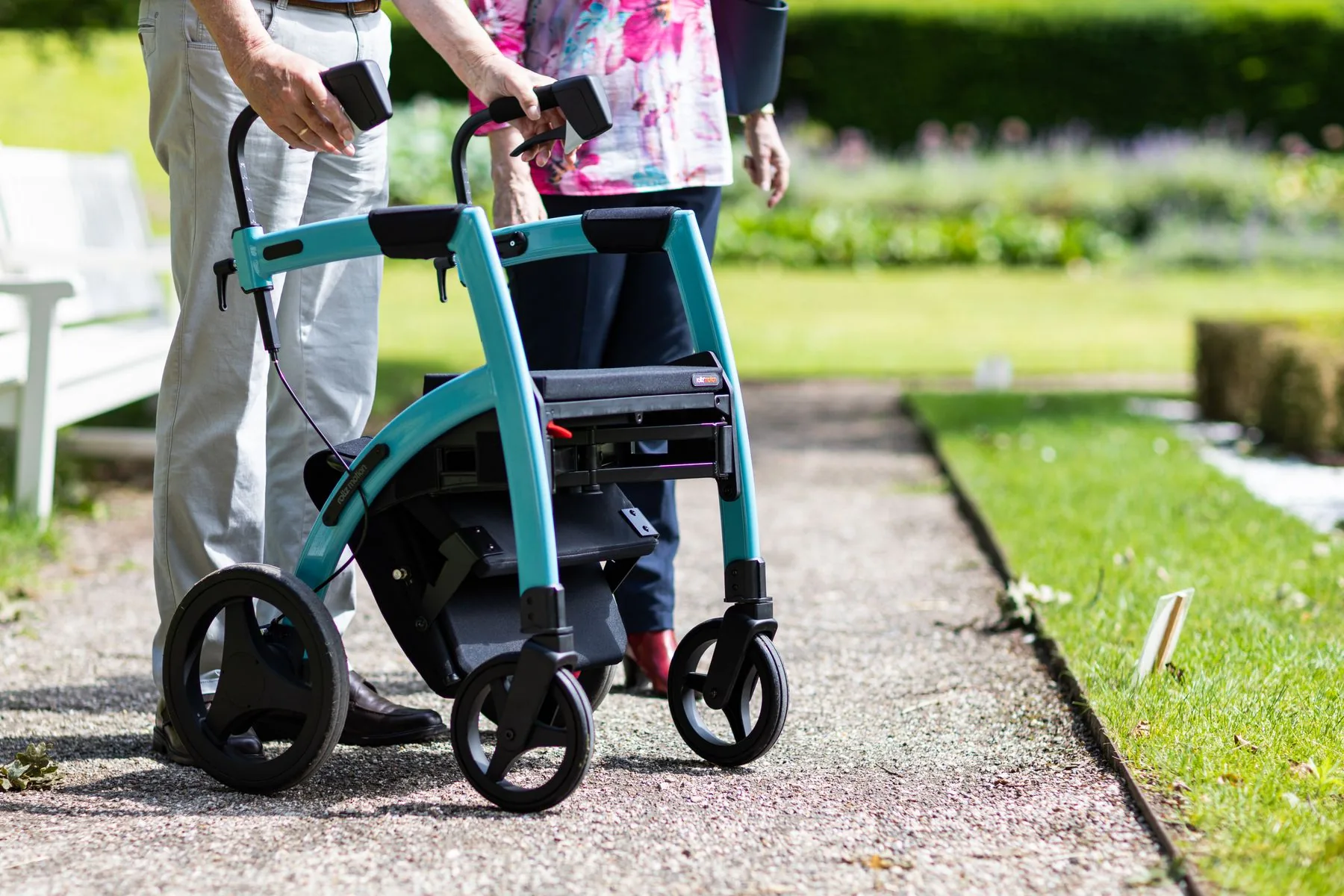
Height is the setting that decides whether the rollator helps
A rollator that is set too high makes you shrug and reach. A rollator set too low makes you stoop. Both change how you walk, and both undo the reason you bought it. Most of the complaints people have about rollators, sore shoulders, aching lower back, a feeling of being pushed forward, are not faults in the frame. They are a handle height nobody adjusted.
This matters more than the specification sheet, and it is the part most often skipped. People measure the boot of the car and the width of the hallway, then take the handles as they came out of the box.
The measurement that matters
Stand upright, in the shoes you actually wear outdoors, with your arms hanging relaxed at your sides. Have someone measure from the floor to the crease of your wrist, the fold where your hand meets your forearm. That measurement is your starting handle height.
Set the handles there and check the result: your elbows should have a slight bend, and your shoulders should sit level and relaxed, not lifted. If you find yourself hunching over the frame to reach the grips, the handles are too low. If your shoulders creep up towards your ears, they are too high.
Two details change the answer, so do not measure in isolation:
- Shoes. Measure in outdoor footwear, not barefoot or in slippers. A thick sole shifts the whole measurement.
- Posture. If someone stands with a permanent forward curve in the upper back, the wrist crease measurement taken while they stand as straight as they can will be too high for how they really walk. Measure them in their natural standing posture.
Then walk with it. Ten steps down a corridor tells you more than any tape measure. You should be walking inside the frame with the rollator moving with you, not trailing behind you like a trolley you are pulling.
The second measurement nobody takes: the seat
If the rollator will be used for resting, the seat height decides whether the person can get back up unaided. A seat that sits too low turns every rest into a struggle, and someone who cannot rise from it will simply stop sitting down, which removes the whole point of having a seat.
Measure from the floor to the back of the knee while seated in a chair with feet flat on the floor. Compare that to the rollator seat height in the manufacturer's specification. Sit on it in the shop if you can. Then stand up from it.
Check the manufacturer's stated user weight limit as well, and take it seriously. It applies to sitting on the seat, not only to leaning on the handles.
When a rollator will not fix the problem
Sometimes the honest answer is that no purchase helps here, and it is worth saying plainly.
If a person leans their body weight onto the handles to stay upright, a rollator is the wrong device and adjusting it will not make it right. A rollator is designed to support balance and give somewhere to rest, not to bear weight. On wheels, a frame that is being leaned on can run away. If someone needs to bear down through their arms to stay standing, that needs assessment by a physiotherapist or occupational therapist, and the answer may be a different device entirely.
The same is true if the difficulty is sudden, worsening quickly, or accompanied by dizziness, falls, or new weakness on one side. Those are clinical questions, and buying equipment can delay getting them answered.
Height is a setting, not a decision
Bodies change. Footwear changes. Posture changes after a hospital stay, after a hip replacement, after a long winter of sitting more than usual. The height that was right in spring may be wrong by autumn, and nobody notices because the change is gradual and the frame is familiar.
This is what Mobility Adaptation means in practice: the equipment gets revisited as the person changes, rather than being bought once and left alone. Re-check the handle height every few months, and always after a change in health, footwear, or how far the person is walking.
What to measure and what to ask
Before you buy, take these three measurements:
- Floor to wrist crease, standing in outdoor shoes, arms relaxed.
- Floor to back of knee, seated, feet flat.
- The narrowest doorway and turn the rollator has to pass through at home.
Then ask the seller:
- What is the handle height range on this model, and does my wrist measurement sit comfortably inside it rather than at the very top or bottom?
- What is the seat height, and the stated user weight limit?
- How wide is it at the widest point, including the handles?
- Can the handles be adjusted without tools, and by how much at a time?
- What is the return policy if it turns out not to fit?
If your wrist measurement lands at the extreme end of a model's adjustment range, choose a different model. You want room to adjust in both directions, because you will need it.
General information, not medical advice. If fit, posture, pressure relief or fall risk is part of your decision, speak to an occupational therapist.