
Buying guide
Choosing a rollator that works outdoors
Wheel size is the whole answer. Why an indoor rollator is unsafe on gravel, and what to buy instead.
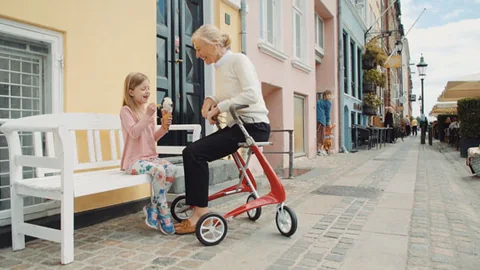
Most rollators sold are indoor rollators, and most people use them outdoors. That mismatch is behind a lot of falls.
Wheel size decides it
- 6 inch. Smooth indoor floors. Will stop dead on a sidewalk crack.
- 8 inch. The sensible all-round choice. Handles sidewalk, curb cuts and light gravel. The byACRE Carbon Ultralight runs 8 inch wheels, which is why it works both indoors and out.
- 10 inch and up, pneumatic. Genuine rough ground: grass, woodland, farm tracks. Heavier and bigger folded.
The physics, briefly
A small wheel meeting an obstacle its own height stops. A large wheel rolls over it. Since the user's weight is going through the handles, a rollator that stops suddenly throws them forward. That is the fall mechanism, and it is entirely preventable by buying the right wheel.
What else changes outdoors
- Brakes. Outdoors you need brakes that hold on a slope, not just park on the flat. Test them on a hill.
- Weight. Outdoor frames are heavier, and there is a real tension here: the heavier it is, the better it handles rough ground and the less likely it is to be carried down the front step. Weight is why we recommend the carbon frame so often.
- The seat. Outdoors, the seat is what extends the walk beyond the person's stamina. It is the difference between a walk to the corner and a walk to the park.
General information, not medical advice. If fit, posture, pressure relief or fall risk is part of your decision, speak to an occupational therapist.
What we recommend
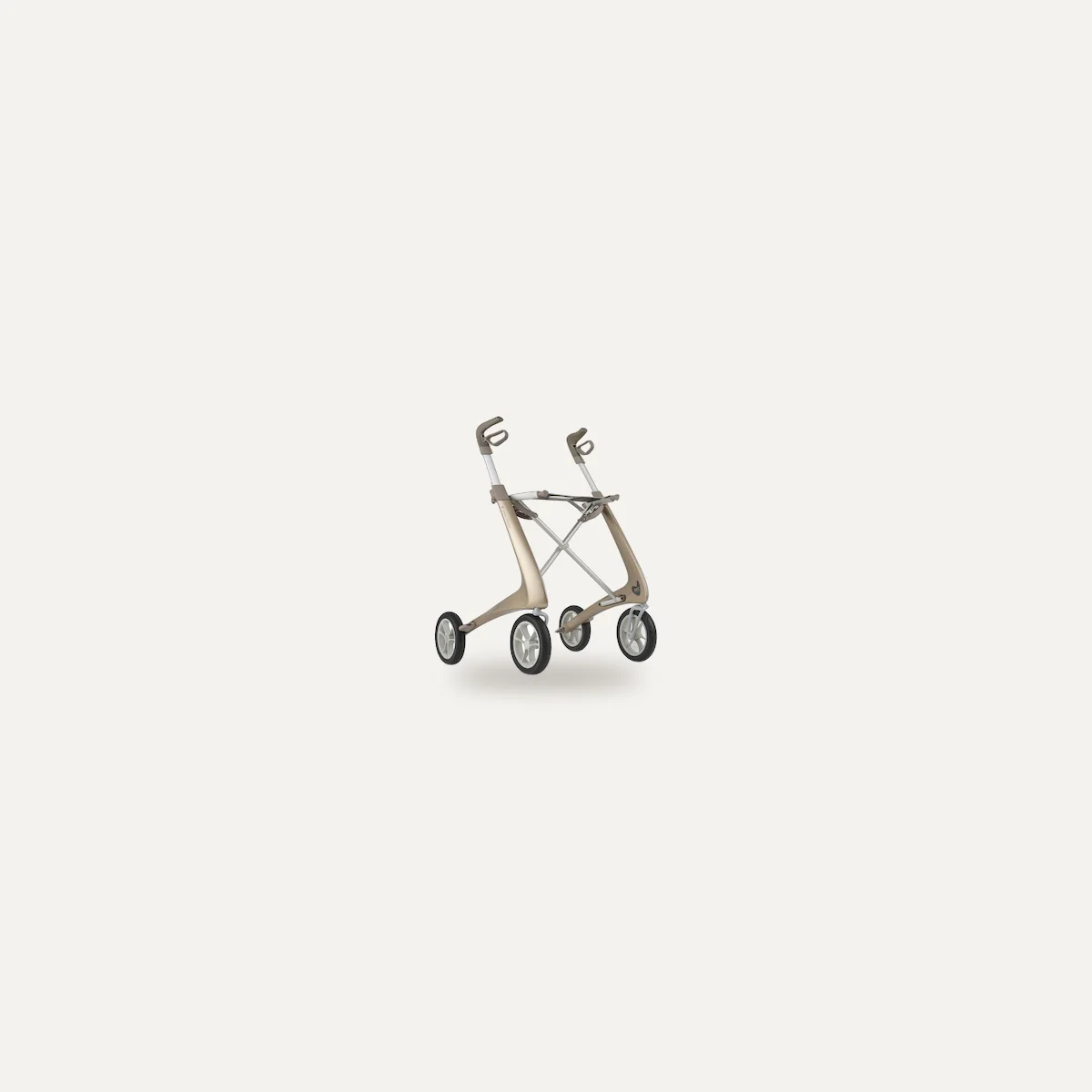 Best rollator, and the one we recommend most
byACRE Carbon Ultralight
Buy this one.
from $1,095
See why →
Reviewing
All-terrain rollator
If the daily walk involves a gravel drive, a park path or a field, a standard rollator is actively unsafe: the small front wheels stop dead and the frame tips.
In review
What we are checking →
Best rollator, and the one we recommend most
byACRE Carbon Ultralight
Buy this one.
from $1,095
See why →
Reviewing
All-terrain rollator
If the daily walk involves a gravel drive, a park path or a field, a standard rollator is actively unsafe: the small front wheels stop dead and the frame tips.
In review
What we are checking →